For these eight nights of Chanukah, we celebrate the abundance we have today–and reflect on how conservation and preservation of our one earth is so important for future generations. The miracle that a small amount of oil lasted eight nights reminds both the Jewish people and the rest of the world that there have been many times throughout our history during which we had to make do with very little by way of natural resources and material comforts. However, our perseverance and faith have allowed us to both survive and thrive.
We have asked you to reflect on what Chanukah means to you. We will be posting a different reflection every night of Chanukah.
Part of these reflections included a live Chanukah Reflections event, the recording can be seen here.
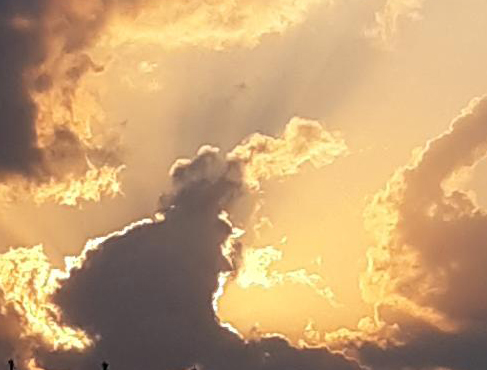
This is an essary based on the Midrash workshops from Dayenu. Plus wise insights from my Unitarian Universalist minister Dave Egan. It’s in 3 parts.
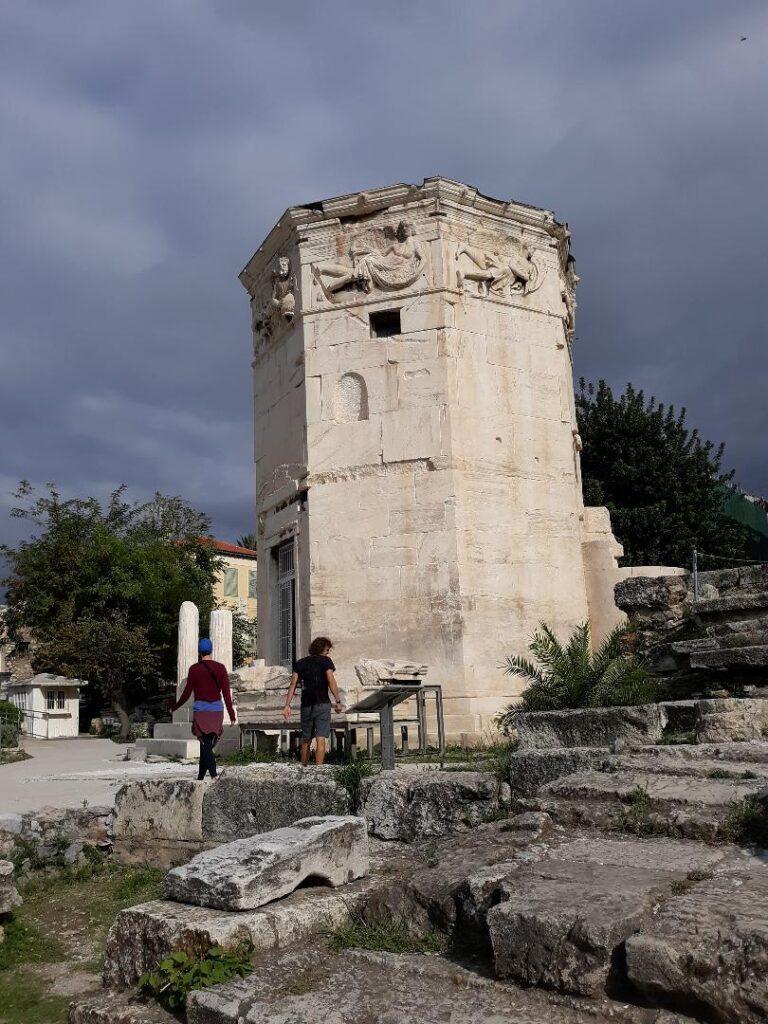
This is the only surviving clock tower from classical antiquity. It also housed a large water clock and incorporated sundials placed prominently on its exterior faces. People used it to orient themselves in space and time. Architecture, sculpture and the new science were perfectly integrated.
Dec 21 - Reflection by Thea Iberall
1. A letter from Adam’s perspective to the future.
I saw the lighted times getting shorter and I got scared. Where was the light going? The 4-leggeds said it would happen but how do they know? They’ve been here longer, but can I believe them? I decided to collect some information. I started marking off the lighted times. And I was seeing a trend. I invented that word – trend. The lighted times were getting shorter and shorter. But then, it changed—the lighted time got longer and longer. Then it switched back. So when I tell you not to have fear, it’s from my new understanding. This is what I now believe: I call it a cycle – the flows and ebbs, yesses and noes, ups and downs. The lighted times come and go. Nothing is coming to an end. And by believing the lighted times will cycle and return, that is the start of being alive in this vastness.
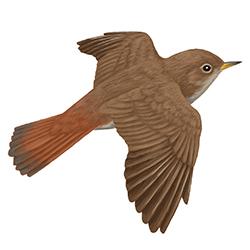
2. A letter written in the year 2200 to the past from a bird’s perspective
This is my last flight, 3200 miles back to Mexico. It used to be almost too hot to fly. I needed to sip more water and I tired easily. Many birds didn’t even bother going back and that in itself was a big risk. But then, the 2-legged mammals changed their ways. I say it started when reality hit them hard. We lose millions of birds every year but they lost four billion. The 2-legged and 4-legged mammals were dying everywhere, some places it was worse than others. They said something about money and technology disappearing. We don’t use those things so I don’t know their need. I just know the 2-legged mammals are different now. They are more like us. They are softer. I think they learned the lesson of survival that the rest of us already knew. To live in harmony, to practice acceptance. To not destroy the commons. I’ve seen large gatherings of 2-legged mammals blessing the harvests and sharing amongst the species. I’ve seen 2-legged and 4-legged walking side by side. I’ve seen gratitude abound.
3. My own reflections
I’m walking the dog. It snowed last night. My feet crunch on the grass. I remember that sound well from times in Cleveland where I grew up. In February, the grass isn’t green, it’s hard. I’m worrying about so many things, money, the future. I feel dread when the darkness descends early and I’m fighting off the cold, encased in my parka, mittens, and boots. There’s a sense of becoming captive in a jail of heaviness. I’m remembering when the days lengthen, how I feel a sense of freedom and excitement, knowing it’s going to stay light for hours. There is a freshness, a buoyance, a soft cotton jacket on my arms.
Yet in that darkness I can always see a light – a Chanukah candle, my mother’s face, the sound of her voice. The sweetness of hot cider and close friends, the taste of Indian food. The warmth of my wife, her voice, ballads I love, the sound of water, the joy of creation from tidbits. These things push back on the darkness. For one more day, I can breathe.
Do others feel the same as I? The dog is sniffing below the layers of snow, searching for evidence of otherness. We use our empathy to sniff out others’ emotions and understand their perspective. I hear empathy comes and goes. WEB Dubois said the problem with the 20th c is the problem of the colorline (racism). Elon Musk said the problem with the 21st century is empathy. Sherry Turkle says empathy is a democracy’s job. Empathy plus action is compassion. Well, here’s a recipe for compassion: Start with 6 ½ cups of acceptance, mix it with 10 tablespoons of gratitude. Open a bag of heart space and dump in the whole bag. Add the realization that you’re not perfect. Recycle the box of judgment until you understand it’s pointing back at you. Add a commitment to service and bake for a lifetime.
Is there anything else other than community? We are hardwired to need live contact with others. The known faces of congregants, the friendly greeting of people. The neighbor who can no longer walk her dog so we do.
The dog gets walked, the bills arrive, we scavenge for food, every day it all restarts. Ebb and flow, the ups and downs. In my 20s, I didn’t like how excitement and joy could so easily be ripped away. So I decided to stay at the bottom, stay depressed, stay hopeless. It felt safer. I wound up lying in the snow almost freezing to death.
But we can’t get away from the cycles. We complex systems are filled with them. Our blinking eyes, our beating hearts. The fast carbon cycle, the lunar tides. The sunspot cycle, financial cycles through busts and booms. Immigration cycles through the pushes and pulls. The long cycle of civilizations, as they rise and fail.
It takes just one candle to start things going. The light increases not by force but by persistence. Empathy happens face to face when we step away from needing to win and we listen, because listening is more important than agreeing.
On this Chanukah, I choose hope over despair. Jana Stansfield said, “I cannot do all the good the world needs but the world needs all the good that I can do.” It’s the big picture and the details, rolled up into one. By a knowing, a letting go, and the fullness of time.
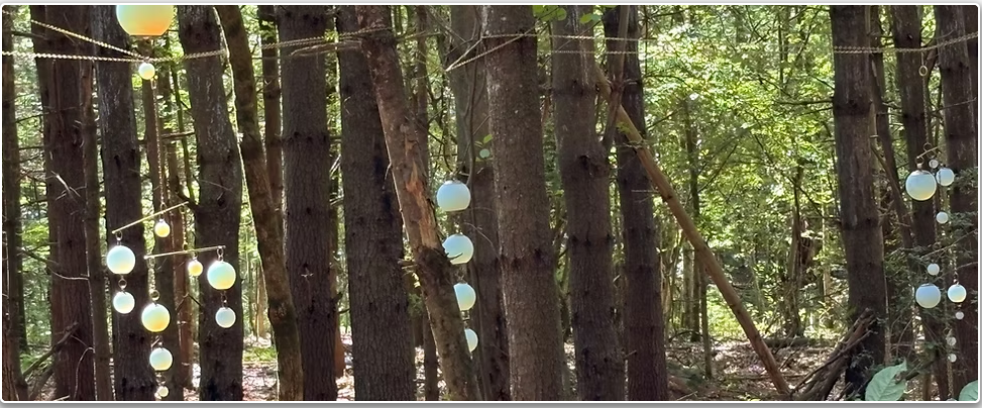
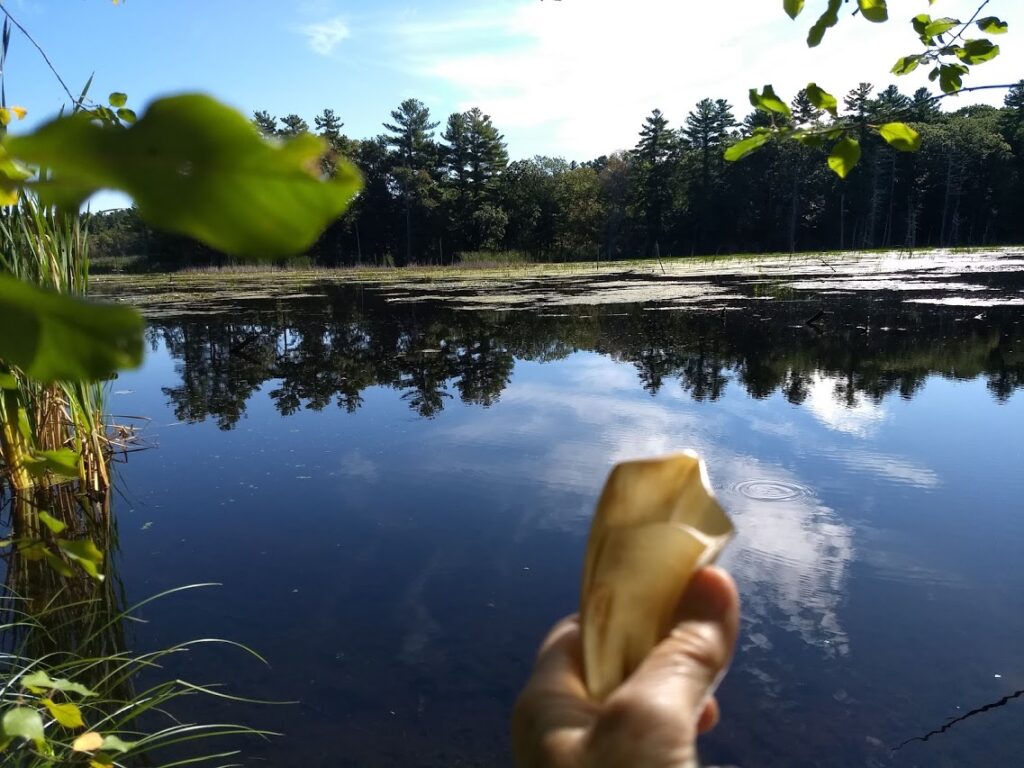
An ekphrastic poem based on the outdoor sculpture by Rebecca Long pictured above, originally published in Art on the Trails Number 9 at the Elaine and Phillip Beals Preserve 2025. To watch a video of the artist discussing her work, please click here.
Dec 20 - Reflection by Rabbi Katy Z. Allen
Sparks of Light
a spark of light caught my eye
and then another and another
they came and went like miracles,
whatever those may be
sometimes when nothing seems possible,
when everything is going wrong
when the weight of the world
and daily life
is overwhelming
when forward movement feels
impossible
out of nowhere
though nothing has changed
an opening appears
a path through the overgrown weeds
a way forward an opportunity
like the intermittent sparkles
that come and go
the pathway closes
behind us
inexplicable
a miracle
Dec 19 - Reflection by Deb Nam-Krane
One thing I have always appreciated about the Torah and the accounts of Jewish history is that, like so many other good systems of mythology, it shows humanity in all of its facets: we have been cruel and capricious as often as we have been noble and brave. The “moral of the story” is the story itself.
The story of Chanukah is no exception, and for this week we’ve asked people to reflect on what lessons this Festival of Light can teach all of us in the age of the Climate Emergency and Ecological Degradation. That our responses were a mixed bag underscores the point that Jewish teachings are not fairy tales but complicated lessons.
Here, in no particular order, are what I think we can take away from the holiday.
- Customs mean something to a culture. The Maccabees aren’t the only people who are going to take it very badly when sacred rituals are forbidden. Let’s keep that in mind as we contemplate our peers in the Native Nations of this continent and the others, and ask ourselves whether our mining operations justify compromising someone else’s land rights and resources.
- Circular firing squads are a bad idea. There were some “Hellenistic” Jews who chose to comply with the Seleucid proclamations, and they were killed by the Maccabees because of it. That begs the question of what they—we?–were fighting for. Customs mean something, but life means more. Persuasion might have been more effective than the sword, even if it would have meant a temporary compromise. Let’s remember who our real enemy is in the fight against climate change and global warming—that would be fossil fuel companies, in case you had forgotten—and save our fire for them.
- What is the definition of pollution? What are the ramifications? There was, in fact, more oil in the temple—but the seals had been broken. It still could have been used, but it had, in some measure, been “polluted”. We eschewed that oil even though it meant hardship for eight nights—and we’ve been bragging about it ever since. What about people who regularly have to make do with polluted water, soil, and food, in this country and around the world? Where is their miracle? Why haven’t they been delivered yet? (Aren’t we called to be the deliverance?)
- The miracle of Chanukah is conservation. I don’t believe in magic, but even the best court magicians of this age would have had trouble extending a resource for eight nights. That is, unless they had the agreement of the community to do so. I don’t know what actually happened during that week, but the only explanation that makes sense is that those people in the temple agreed among themselves that they were going to conserve—use less than they usually did—so their precious resource had a chance of lasting long enough. THAT is the agreement we all need to come to, right now.
- We need to rethink a celebration of abundance in an age of abundance. In a culture that—in the aggregate—uses as much energy as it wants every day, perhaps it’s no longer appropriate to celebrate a week of doing just that. Just as people are beginning to practice a Reverse Tashlikh—removing pollution from the water, rather than using the water to cleanse us of our sins—Chanukah should become a week during which we use as little oil as possible! If that’s too big a lift, then perhaps we can observe one day a month in which we consciously cut back on our energy consumption so that we “earn out” these eight days.
- Chanukah is a time for togetherness and community. My daughter reminds me that we celebrate the holiday during the winter, and it is during the winter that we need to combat isolation and deprivation. We do that through community, and it is only through community that we can arrive at solutions to the Climate Emergency.
Happy Chanukah, and thanks to the JCAN-MA community for always asking—and answering—the uncomfortable questions.
Dec 18 - Reflection by Matt Liebman
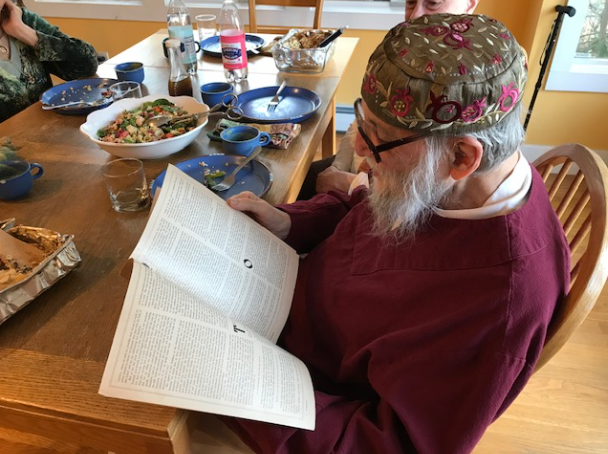
This is a story about a box of things – writings, newspaper clippings and magazine articles — I saved from my father who passed away in 2016, and how a visit with Rabbi Arthur Waskow allowed me to reflect on my own family’s Jewish values.
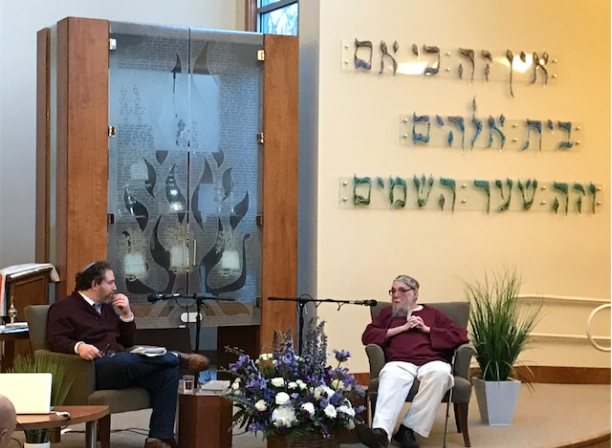
Rabbi Arthur Waskow, who passed away last month, visited Acton Massachusetts in March of 2019 as a guest of the Congregation Beth Elohim. Rabbi Waskow was the in the area for the second Jewish Climate Action Network of Massachusetts conference. Our then-rabbi, Mike Rothbaum, arranged a sit-down interview in our sanctuary—a special event for our congregation. It was billed as A Life of Godwrestling: Rabbi Arthur Waskow in Conversation with Rabbi Mike Rothbaum and I was happy to help organize it as co-chair of CBE Adult Education.
Before the presentation he joined us at our Acton house for lunch, with a few other members of the Adult Education committee. Leading up to the event, I learned more about Rabbi Waskow, and I realized that he had written The Freedom Seder, a Haggadah that connected and updated the story of Exodus to the struggle for civil rights in the 1950s and 1960s. I remembered that my father Dr. Jerome Liebman – a devoted physician and civil rights activist in Cleveland — once used this Haggadah for our family seder in the early 1970s, a time of hope and activism for civil rights, democracy, peace, and environmental protection. My father’s choice of Haggadah linked our family tradition to the larger fight for peace and equality – it was his way of weaving his Jewish values into our family gathering.
So, decades later, I pulled out that Haggadah from the box of papers that I saved from my father, who passed away less than three years earlier. At the lunch, I brought out the slightly yellowing and worn pages from Ramparts Magazine where it had been published in 1969 to show Rabbi Waskow. I told him a little bit about my father, and he signed the then 60-year-old seder from the delicate magazine pages. It was almost like getting an autograph from a sports star, but a little bit more significant.
The interview was also special. In a compelling ninety minutes, he talked about his life’s journey, from a secular childhood growing up in Baltimore, and how he first became more observant, and the challenges and inspirations of his social activism. He also talked about his personal experience taking part in anti-war demonstrations in DC in the 1960s, which were being quelled by the military in the spring of 1969. Walking home through this oppressive occupation inspired him to voice his Jewish values and re-tell the story with modern narratives of freedom in a new Haggadah. He reflected on other events in his life, including his interactions with inspiring heroes, like Rabbi Heschel, and I think the conversation stirred many in the congregation to use their own Jewish values to recognize and correct injustices, to speak out against the government, and to engage in Tikkun Olam.
As many people know Rabbi Waskow was one of the founders of the modern Jewish social justice movement, progressive Judaism and the Jewish Renewal movement. But his legacy was not just captured in a ninety-minute interview. Without realizing it, he influenced my Jewish path for over 50 years.
As we reflect on the miracles of light this Chanukah, we are reminded that the holiday also speaks to a message of liberation over oppression, including freeing us from – ironically – oil-producing nations.
The Jewish Climate Action Network of Massachusetts (JCAN-MA) provides the Jewish voice to address the Climate Crisis and was strongly inspired and influenced by Rabbi Waskow. Our fourth JCAN conference at Temple Beth Elohim in Wellesley was held in June 2025, and we were honored that Rabbi Waskow was able to share a few recorded remarks with the attendees. You can view a recording of his remarks on the JCAN website.
Dec 17 - Reflection by Marcia Cooper
“For me, it’s a time to celebrate all the miracles of life, and reflect on our commitment to protect things that matter the most, like our democratic principles and natural resources, while working to achieve substantial progress for climate solutions.”
Dec 16 - Reflection by Andy Oram
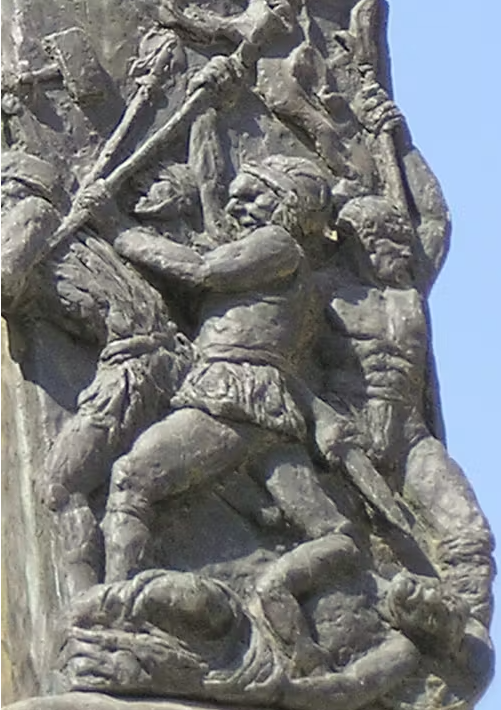
Rededication
We face the land too long contended.
The mountains groan where battalions trampled them,
The valleys of abandoned stones where citadels once stood.
The keening still stalks our ears, the mourning for our martyrs.
The people cry out each day from hunger.
Perhaps we trusted too much in those who launched the rebellion.
In the father who enjoined us to take up swords.
In the son who fought long after we conquered the country and retook the city:
On to Idumea, he cried—on to Ammon, to Gilead, to Philistia.
We never relaxed our grip on our weapons, even on the Sabbath.
How do our babies engage with the world we promised them?
The soft faces with unmolded cheeks, clenched on hearing
The clash of metal and the throttled gasps of the wounded.
The Temple we fought for remains.
Let us unclasp our breastplates and enter.
Let us celebrate a holiday, even though it’s not the season for one.
Strike the flint and lay its spark amidst the oil.
Let us lift up our children
Where they can stretch aspiring fingers toward the precious glowing wicks.
Say to them, peace be our plunder.
Let the Earth breathe a year
While we rest beneath the vine and the fig tree.
Though we have little, we will clock its increase.
And we will come together again
To watch the days expand.
Dec 15 - Reflection by Judith Black
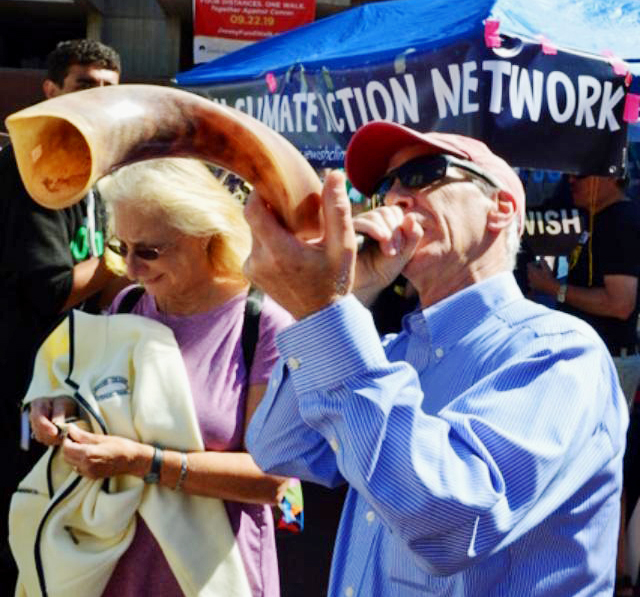
“War is never the preferred option. It is environmentally destructive. It is humanely destructive. It defies the hope that peace can be our dominate modality, by creating hate, destroying resources, hurting and shaming. Can any real peace emerge from war? Alas, the Maccabees were dogmatic fanatics and could not even compromise with other Jews. Their reign was typified by fratricide, forced circumcision of the entire population, and imperializing on neighbors. So corrupt was it, that It bore the birth of a messianic era. So, this holiday is a brilliant reminder what not to do.”
Dec 14 - Reflection by Evan Raskin
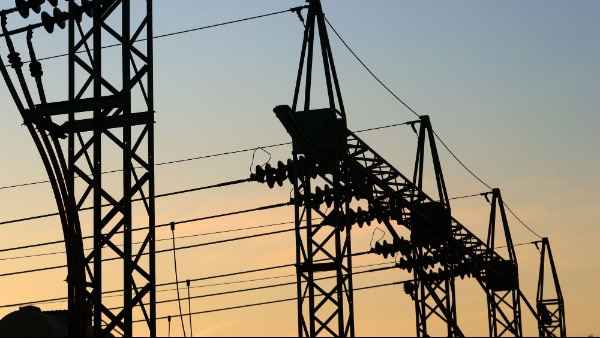
“The scarcity of oil within the Chanukah story is blatantly connected to the modern climate crisis. The world’s transition away from fossil fuels is a long journey, and will take quite a bit more than 8 days before our civilization is no longer reliant on fossil fuels like oil. Just as in the story, we must conserve use of these resources as much as possible. During this period of transition, energy efficiency and mindfulness of our use of power has never been more important.”